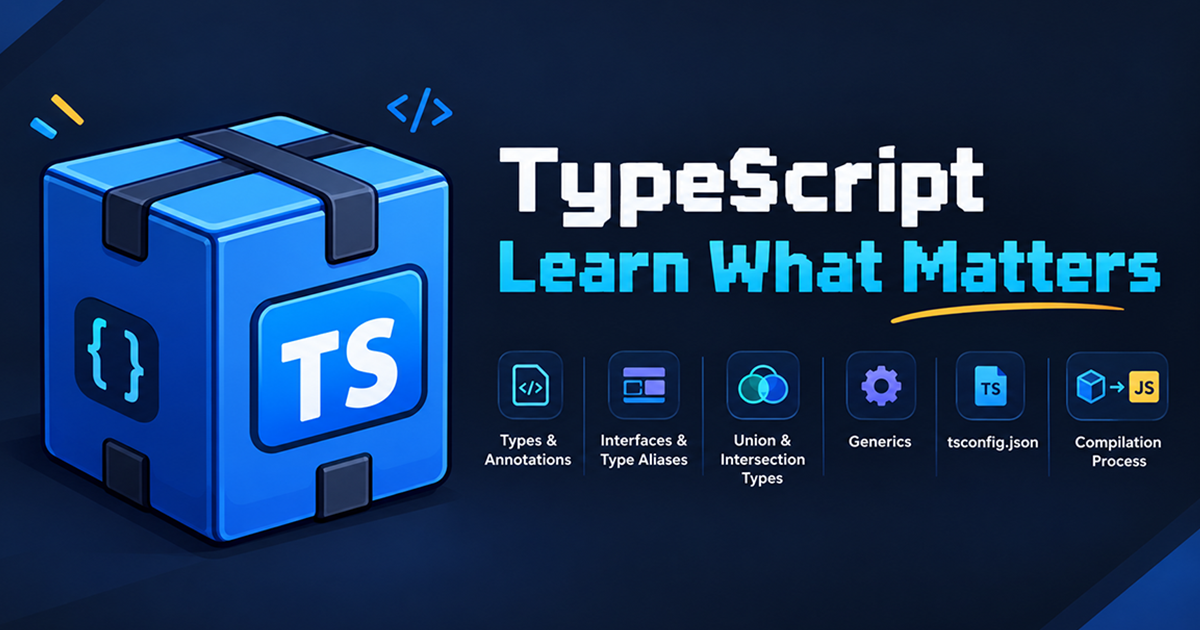
TypeScript: Learn What Matters
If JavaScript works, why did we ever need anything else? That is the right question. JavaScript will let you write a little script with little ceremony. Create a variable, pass to a function, change i
If JavaScript works, why did we ever need anything else? That is the right question. JavaScript will let you write a little script with little ceremony. Create a variable, pass to a function, change i
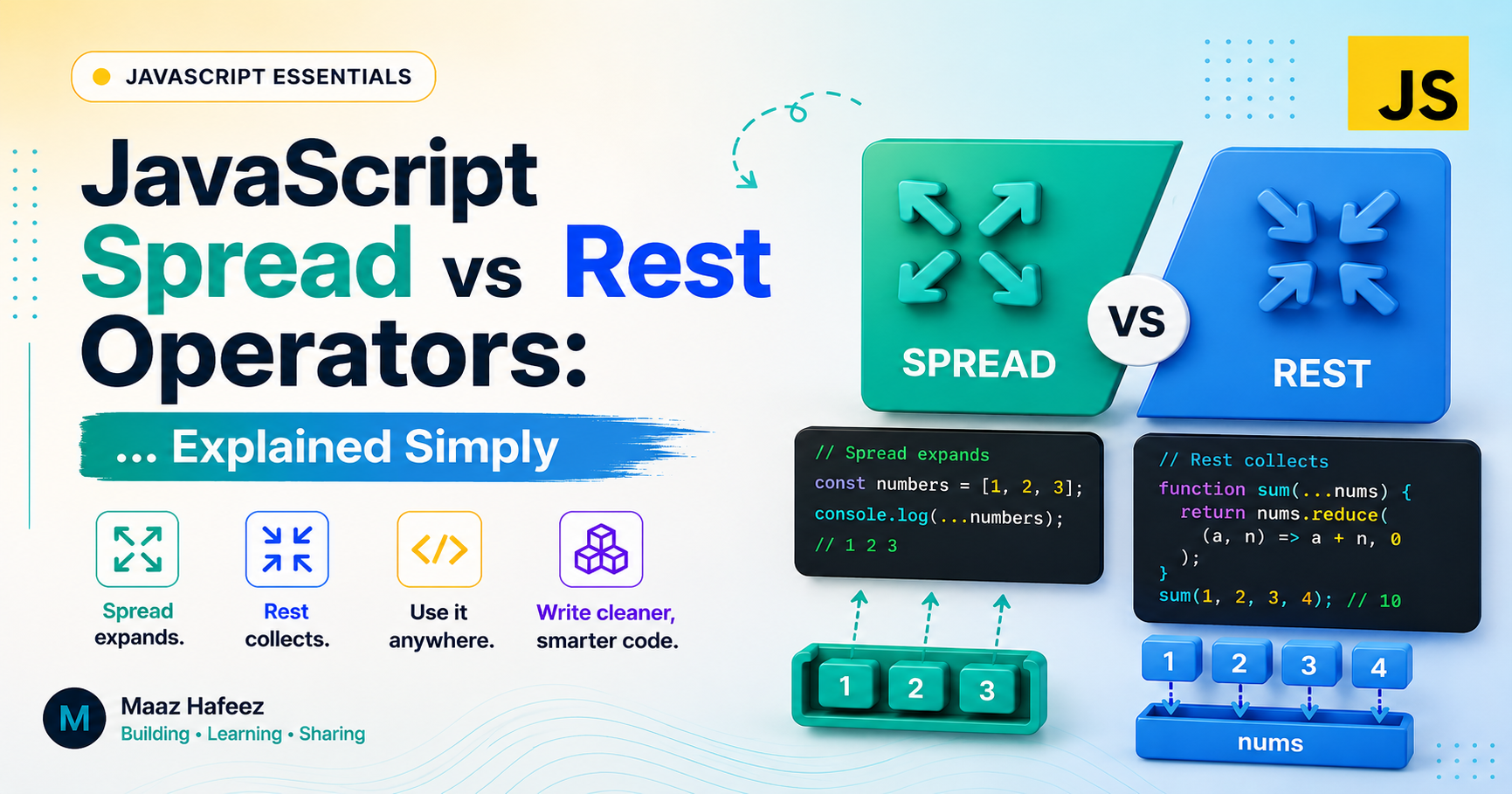
JavaScript has a syntax that looks deceptively simple: ... You may have seen it used with arrays, objects, function parameters, or destructuring. But here's the confusing part: The same ... syntax ca
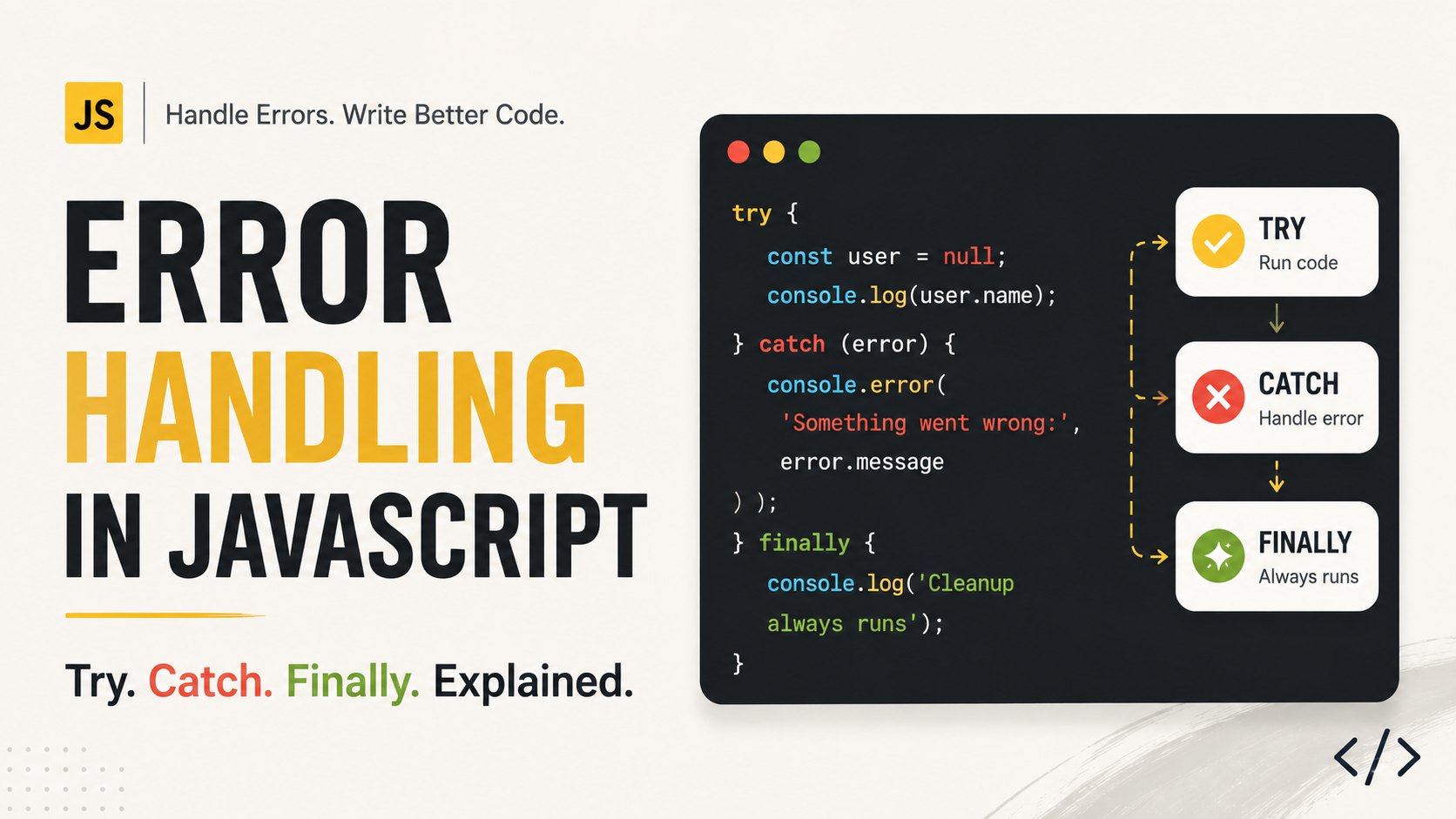
Your JavaScript code can be perfectly valid and still fail while running. For example: const user = null; console.log(user.name); The code is syntactically valid, but JavaScript throws a runtime err
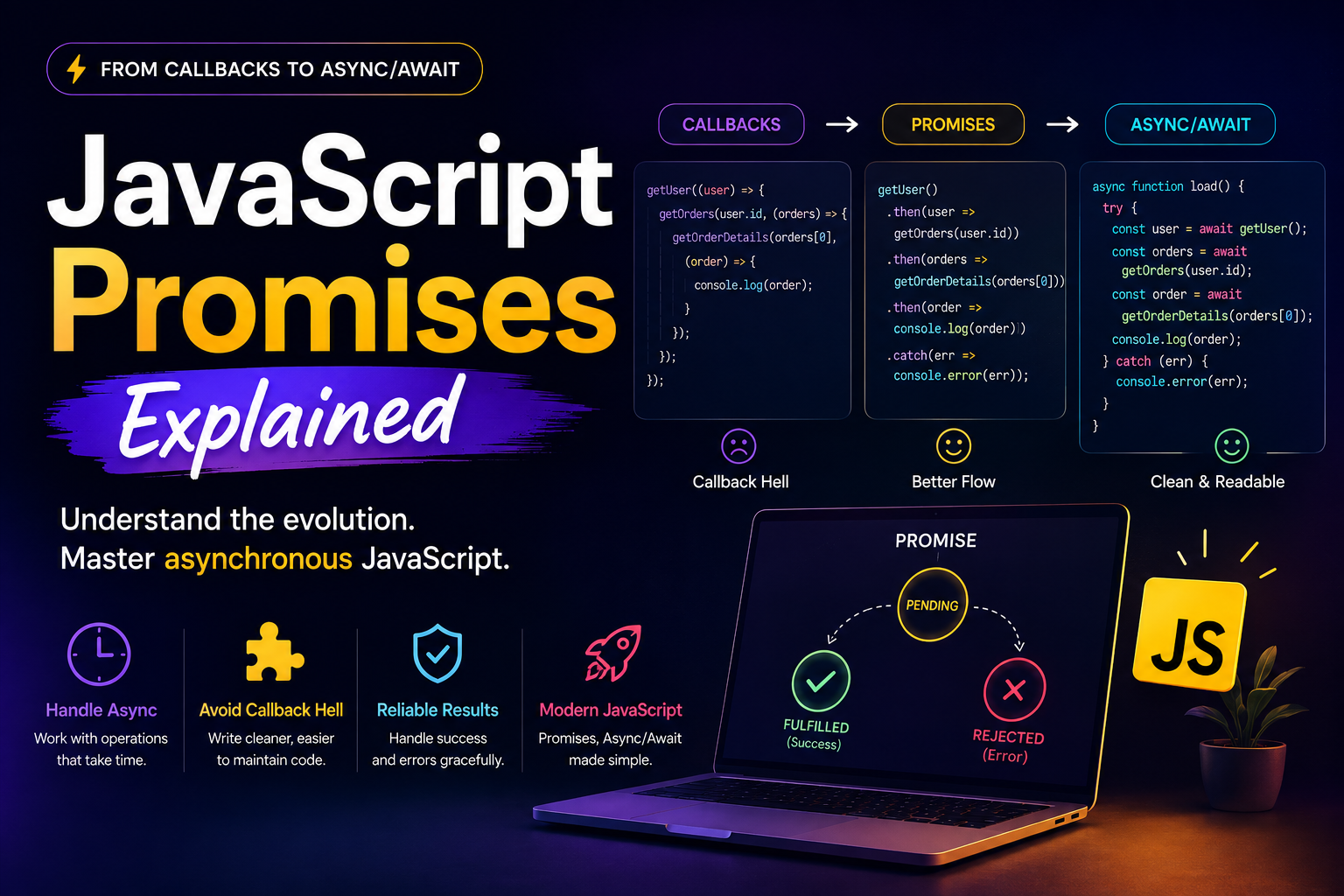
JavaScript often needs to wait for things that don't finish immediately. Fetching data from an API, waiting for a timer, reading a file, or saving information somewhere can all take time. But JavaScri
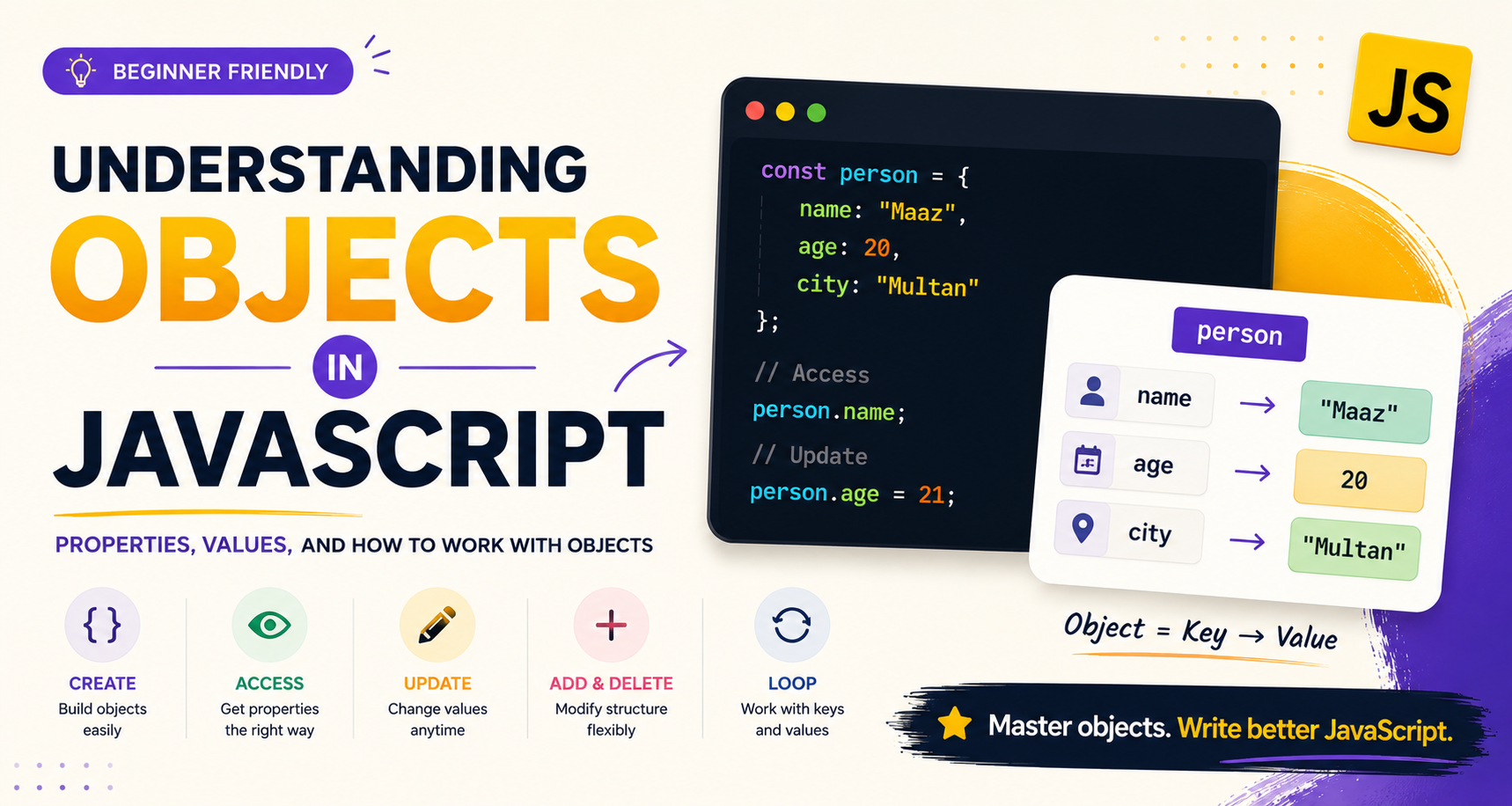
If you've written JavaScript, you've already worked with objects. Users, products, students, orders, API responses, application settings, and even parts of your UI state are commonly represented as ob
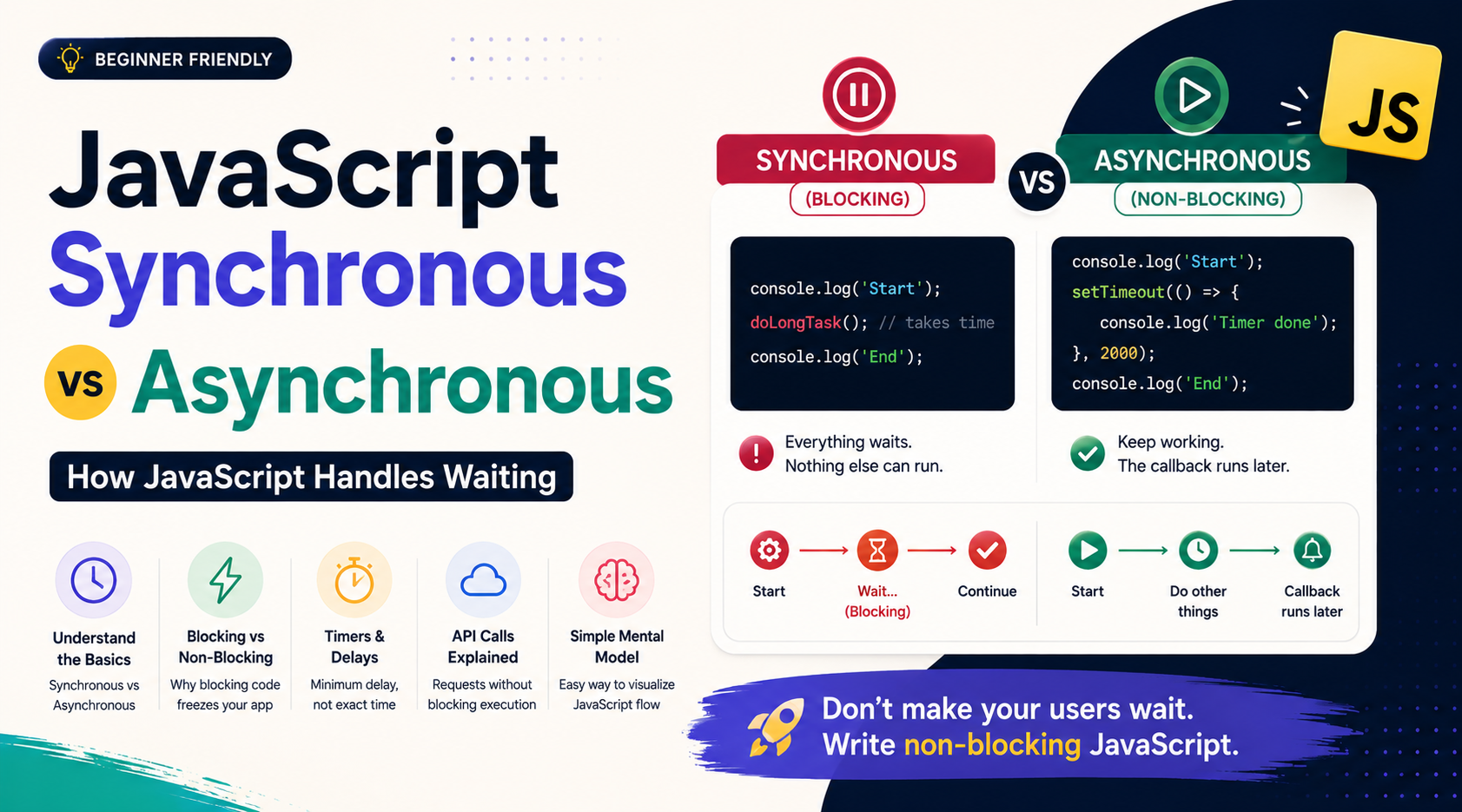
Imagine your JavaScript program needs to fetch data from an API. The request might take a few milliseconds—or a few seconds. Does JavaScript stop everything and wait for the response? Not necessarily.
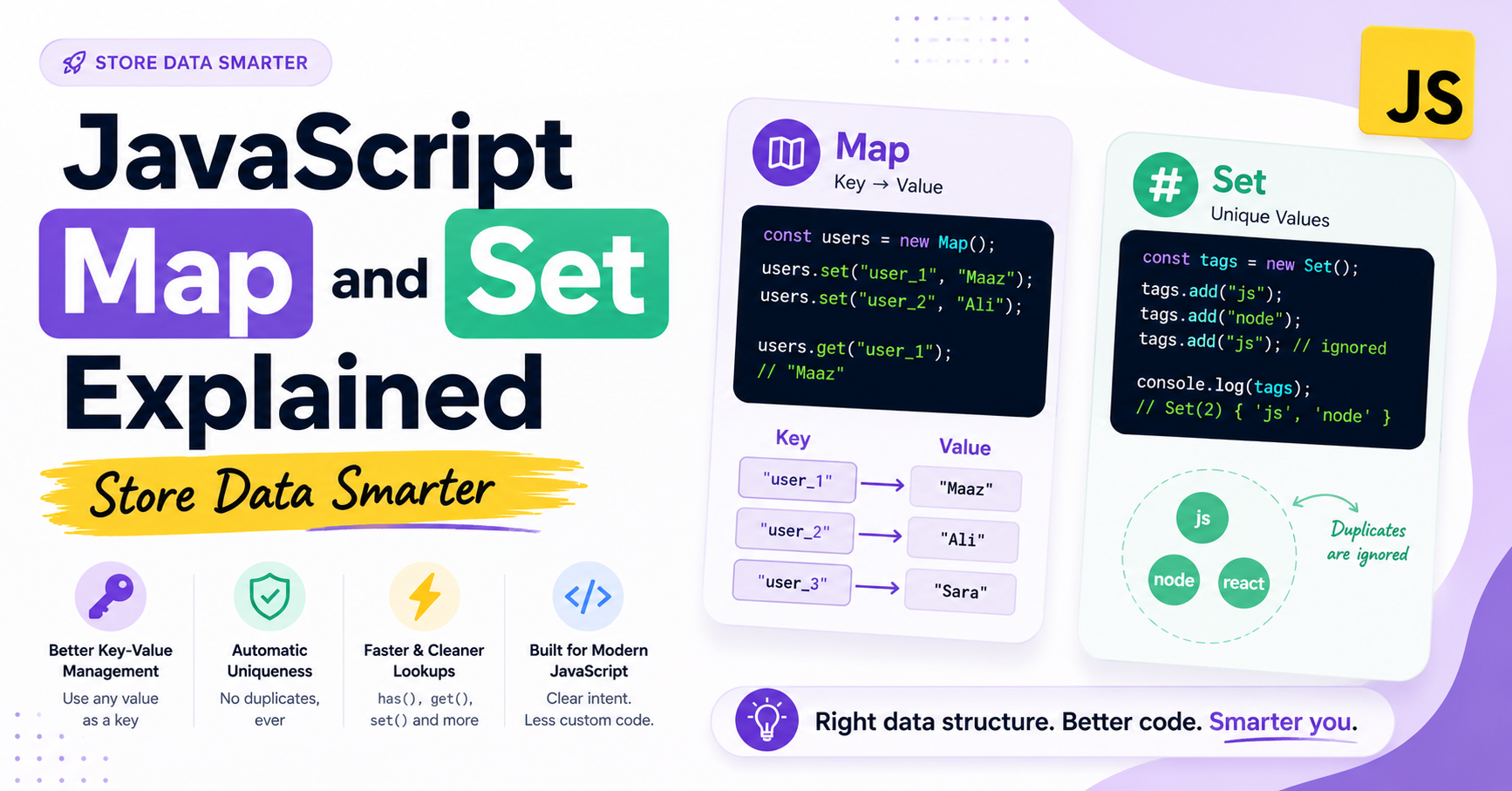
If you've worked with JavaScript, you've probably used objects for key-value data and arrays for lists. They're powerful, but sometimes you're forcing them to solve a problem they weren't specifically
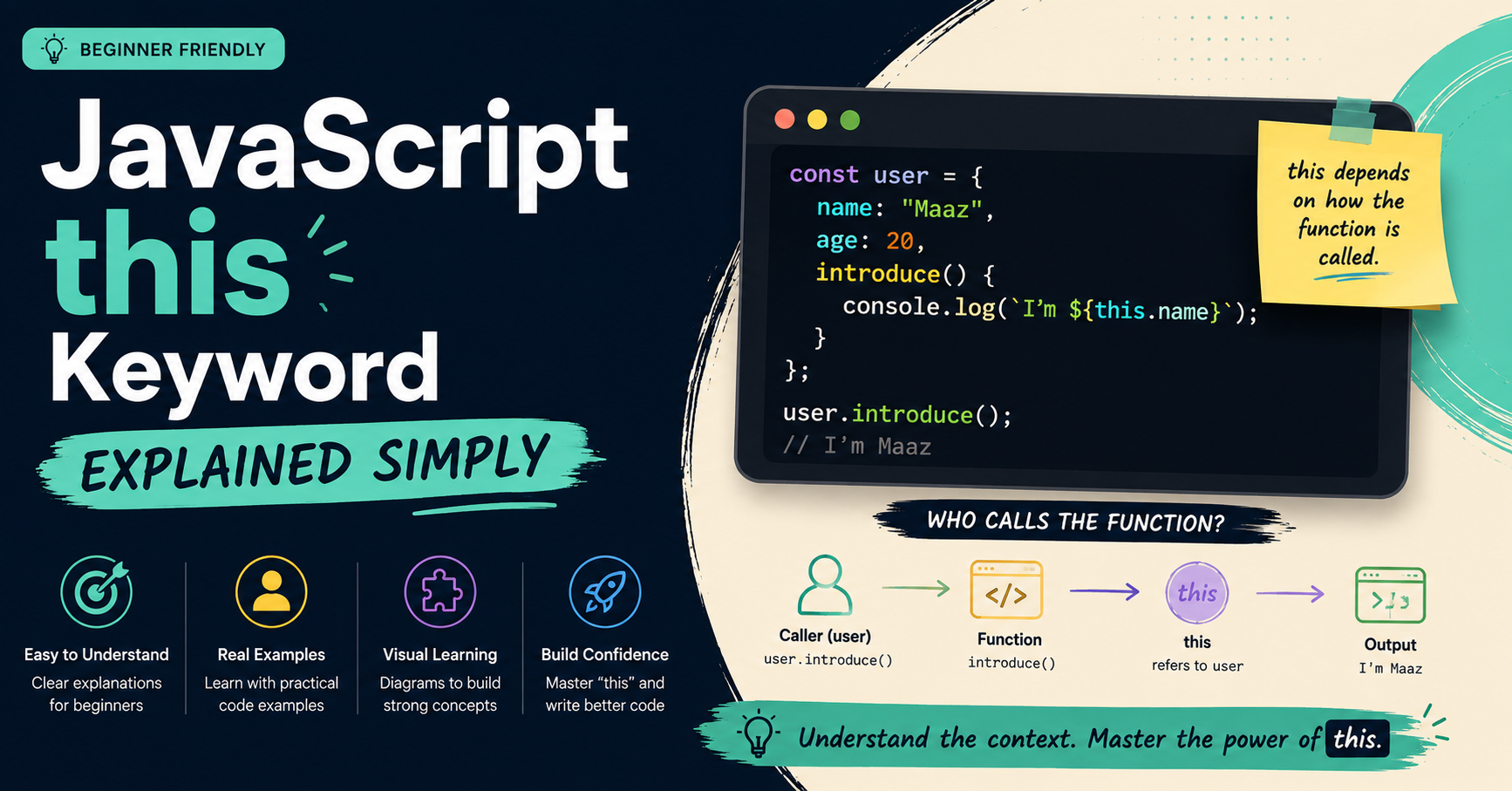
If you've ever seen JavaScript code like: this.name and wondered: "What exactly is this?" You're not alone. this is one of those JavaScript concepts that looks simple but becomes confusing when the
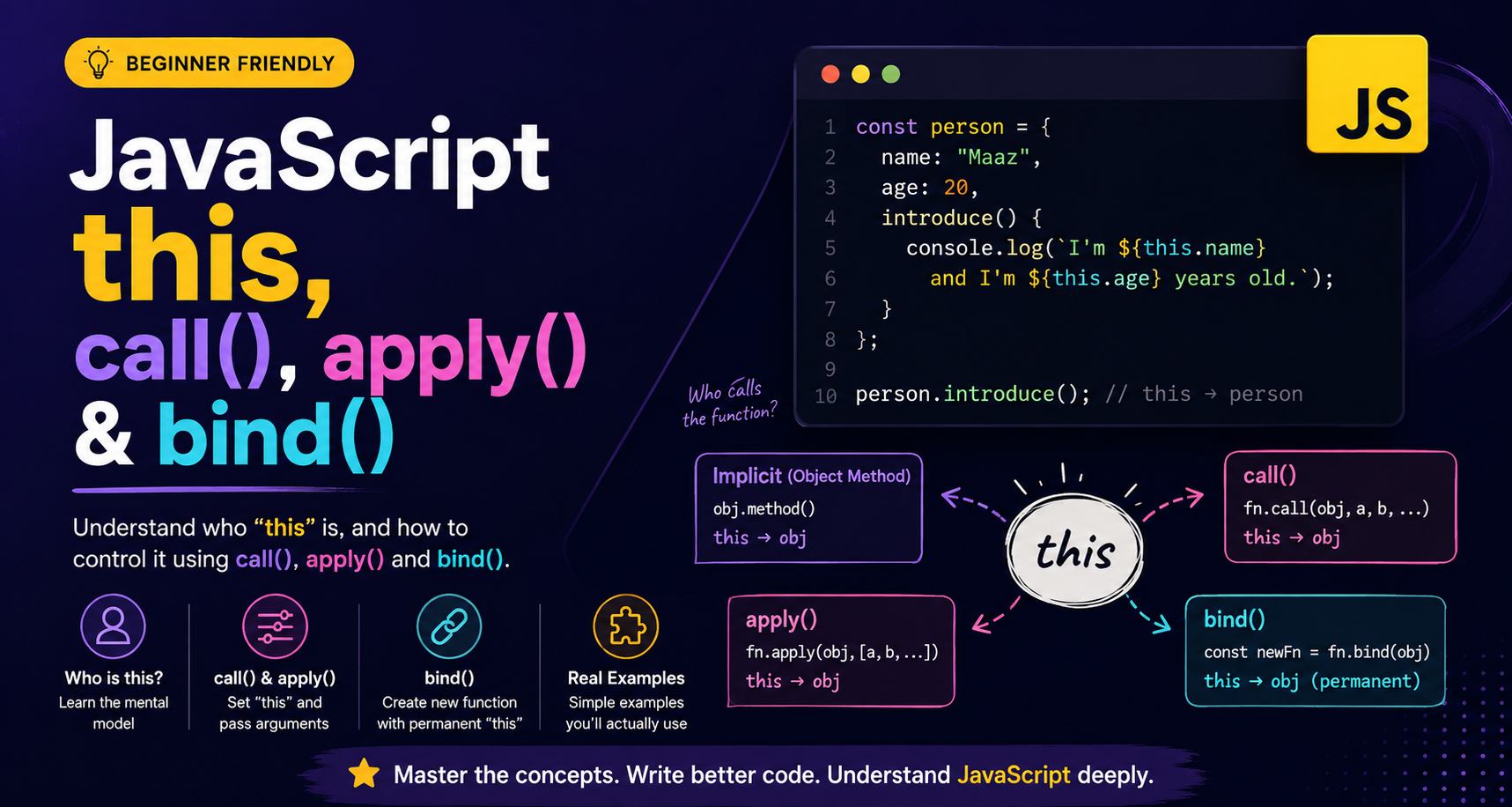
If you've written JavaScript for a while, you've probably seen this: this.name It looks simple. Then you put it inside a function and suddenly this becomes undefined, a global object, or something co